Category Foster Friendly Podcast

Episode 77 – Cross Cultural Adoption Insights and Their Native American Adoption Story with Greg and Sam Hollback

In this episode of the Foster Friendly podcast, hosts Courtney Williams and Travis Vangsnes welcome Greg and Sam Hollback, a couple who have adopted two Native American daughters through the I Belong Project. They discuss their life in Daytona Beach, their community engagement, and their professional backgrounds in youth advocacy and education.

The Hollbacks share their adoption journey, including the challenges and joys of finding their daughters, the importance of cultural considerations in adoption, and how they incorporate Lakota heritage into their family life. They reflect on their experiences as a multicultural family and the significance of belonging and identity for their children.

Checkout our free webinars on practical and relevant foster care and adoption topics
FosterCon.org

Learn more about Youth Advocate Programs:
https://www.yapinc.org/

Takeaways
  • Living in Daytona Beach offers a unique lifestyle for families.
  • Adoption processes can take time and require patience.
  • Cultural understanding is crucial in the adoption journey.
  • Incorporating a child's heritage can enrich family life.
  • Community engagement is important for personal fulfillment.
  • Children need time and attention to adjust in new environments.
  • Adopting cross-culturally requires sensitivity and awareness.
  • Language learning can strengthen family bonds and cultural identity.
  • The importance of being accepted as a family in diverse communities.
  • Adoption is about love and connection, not perfection.

Episode 76 – Navigating the Unique Challenges of Transracial Adoption with Isaac Etter

In this episode of the Foster Friendly Podcast, hosts Courtney and Travis engage in a deep conversation with Isaac Etter, a transracial adoptee and social entrepreneur. They explore the complexities of adoption, particularly transracial adoption, and the grief that often accompanies it. Isaac shares his personal journey, highlighting the importance of open conversations about race and identity within adoptive families. The discussion also touches on cultural differences, code switching, and the concept of ghost kingdoms, emphasizing the need for unconditional love and understanding in the adoption process.
Takeaways
  • Isaac was adopted at age two and faced challenges in understanding his identity.
  • Adoption is complex and often involves grief and loss.
  • Conversations about race should be normalized in transracial families.
  • Grief in adoption can manifest during significant life transitions.
  • Cultural differences play a crucial role in shaping identity for adoptees.
  • Code switching is a common experience for transracial adoptees.
  • Ghost kingdoms represent unexpressed curiosity about birth families.
  • Unconditional love is essential for adopted youth.
  • Adoptees often need compassion and grace as they navigate their identities.
  • Open dialogues about race can help adoptees feel secure in their identities.

Episode 75 – Gaining a Better Understanding of Grief and Loss in Adopted Children with Pam Bauer

In this episode of the Foster Friendly podcast, host Brian Mavis and co-host Courtney engage with Pam Bauer, a mother of 14 adopted children, to discuss the complexities of adoption, grief, and parenting. Pam shares her insights on the challenges of raising a large family, the importance of addressing grief in adopted children, and the need for open conversations about their birth families. The discussion emphasizes the significance of understanding loss, building connections, and providing emotional support to adopted children as they navigate their unique journeys.

Takeaways
  • Adopted children often experience grief related to their biological families.
  • Grief can be an opportunity for attachment and healing.
  • Open conversations about adoption are crucial for children's understanding.
  • Children may feel divided loyalties between adoptive and biological parents.
  • Rituals can help children process their grief and loss.
  • Understanding emotions and body language is essential in parenting adopted children.
  • Grief is a lifelong journey that evolves over time.
  • Adoptive parents should encourage their children to express their feelings.
  • Children need to know they are loved and valued regardless of their background.
  • It's important to recognize the mixed emotions surrounding adoption.
Whether you’re considering becoming a foster parent or just want to better understand the adoption ecosystem, this conversation offers wisdom, hope, and practical insight from someone who’s lived it out for decades.

Episode 74 – Adopting From Foster Care: Common Myths and Helpful Tips and Insights

In this kickoff to National Adoption Month, host Brian Mavis sits down with his cohosts (and adoptive parents) Courtney and Travis to discuss the real-world challenges and beauty of adoption. Together they unpack common myths about adoption, share their own powerful stories—from fostering to international adoption—and explore the ethical and emotional complexities that come with saying “yes” to a child.
Key topics covered:
  • Their family stories: international adoption, adoption through foster care, and breaking “birth order”
  • The biggest myths about adoption—cost, home ownership, and who’s eligible
  • Why “foster to adopt” isn’t the right mindset
  • The ethical advantages of adoption through foster care
  • The “marriage of adoption” and the lifelong commitment it represents
  • What support (and lack thereof) adoptive families can expect
  • The I Belong Project and how it’s helping connect waiting kids with forever families
  • Practical, heartfelt advice for those considering adoption
Whether you’re just exploring adoption or already in the process, this episode offers honest insight, encouragement, and direction from those who’ve lived it.
Resources Mentioned
  • America’s Kids Belong – www.americaskidsbelong.org
  • Learn more about the I Belong Project and watch videos of kids waiting for adoption
  • Explore “The Fostering Front Door” to learn about ways to get involved

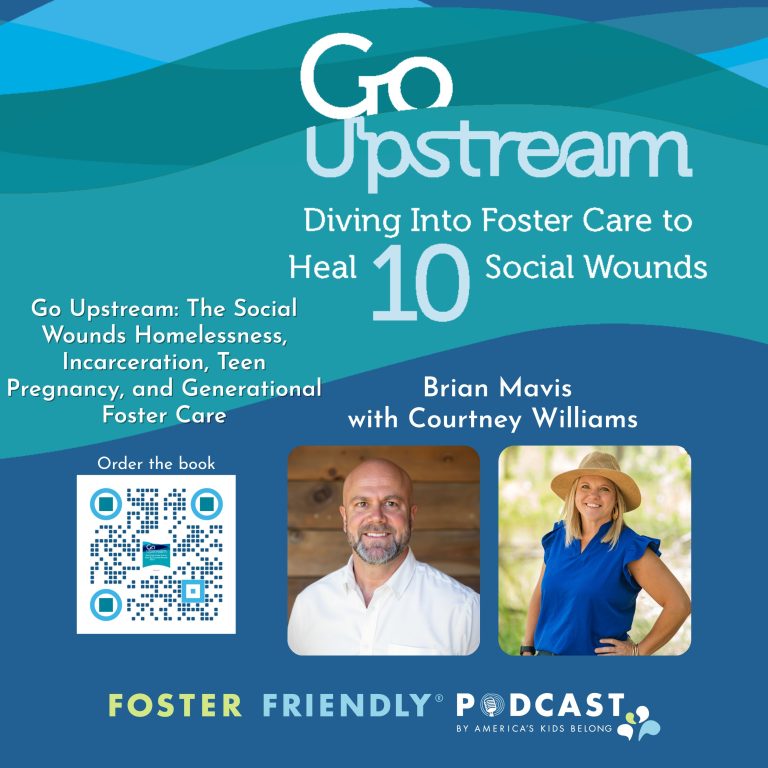
Episode 73 – Go Upstream: A Call to Action in Response to the 10 Social Wounds Affecting Foster Care

In this episode of the Foster Friendly Podcast, host Courtney and guest Brian Mavis discuss the themes of foster care and adoption as outlined in Brian's book, Upstream. They explore the importance of self-assessment for potential foster parents, the preparation needed for welcoming a child, and the realities of transitioning from foster care to adoption. The conversation emphasizes the need for community support, the role of businesses and faith communities in fostering a supportive environment, and the introduction of the Foster Friendly app as a resource for families. The episode concludes with a call to action for listeners to take their next steps in supporting foster care and adoption efforts.
Takeaways
  • Self-reflection is crucial before becoming a foster parent.
  • Creating a safe and welcoming environment is essential for children.
  • Adoption is a journey that involves ongoing support and understanding.
  • Community support is vital for the success of foster families.
  • Businesses can play a significant role in supporting foster care initiatives.
  • Faith communities can provide essential resources and support for foster families.
  • The Foster Friendly app connects families with local resources and support.
  • Every small action can contribute to a larger impact in foster care.
  • Understanding trauma is key to supporting children in foster care.
  • Flexibility in approach is important for foster and adoptive families.

Episode 72 – Finding Family in Unexpected Places: The Inspiring Story of Foster Care Alum Liz Sutherland

In this episode of the Foster Friendly Podcast, host Courtney Williams and co-host Travis Vangsnes welcome Liz Sutherland, a former foster youth and author. Liz shares her journey through foster care, the challenges of aging out, and the importance of resilience and support.

She discusses her experiences of finding family in unexpected places, the power of education, and the impact of her memoir, 'No Ordinary Liz.' Liz also highlights the need for kindness and unconditional love for children in foster care, and her hopes for her children's book, 'The Extraordinary Story of No Ordinary Liz,' to foster understanding and compassion.

Checkout her books:

The Extraordinary Story of No Ordinary Liz

No Ordinary Liz: Surviving and Thriving After Foster Care

Takeaways
  • Liz Sutherland is a former foster youth and author.
  • She entered foster care at age 13 after an abusive home life.
  • Aging out of foster care means turning 18 and becoming independent.
  • Support from strangers was crucial for Liz during her transition to adulthood.
  • Education became a key focus for Liz to build a better future.
  • Liz found a sense of family and belonging while working at Walmart.
  • Reuniting with her siblings was a pivotal moment in Liz's life.
  • Writing her memoir was a therapeutic process for Liz.
  • Liz aims to inspire others through her story and advocacy.
  • Unconditional love is essential for children in foster care.

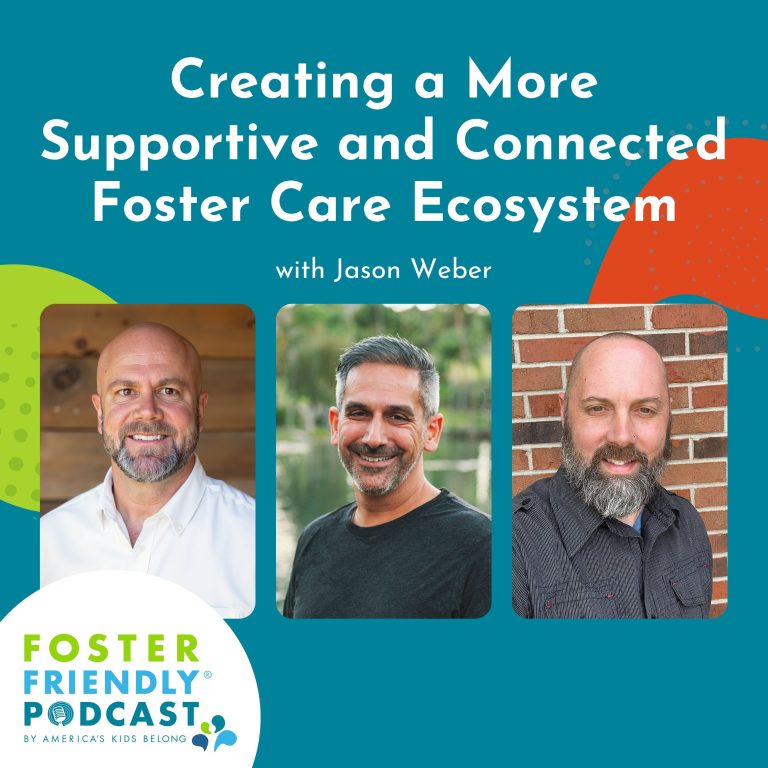
Episode 71 – Creating a More Supportive and Connected Foster Care Ecosystem with Jason Weber

In this episode of the Foster Friendly podcast, host Brian Mavis and co-host Travis engage with Jason Weber, a seasoned advocate for foster care and co-founder of the Christian Alliance for Orphans (CAFO). They explore Jason's journey into fostering, the challenges faced in the foster care system, and the importance of community collaboration. Jason emphasizes the need for unconditional love and support for children in foster care, while also discussing the vision of 'More Than Enough' to ensure every child has a safe and loving environment. The conversation highlights the significance of building relationships and working together to create effective solutions for vulnerable children and families.
Takeaways
  • Jason Weber has been working with vulnerable children and families for 28 years.
  • Foster care is about restoring families, not just caring for children.
  • The journey into fostering often begins with a personal commitment to serve.
  • Collaboration among community members is essential for effective foster care solutions.
  • The Christian Alliance for Orphans (CAFO) was formed to unite organizations working in foster care and adoption.
  • More Than Enough is a vision to ensure every child has an ideal placement.
  • Children in foster care need unconditional love and support from their communities.
  • The government alone cannot solve the foster care crisis; it requires community involvement.
  • Building relationships is key to successful collaboration in foster care.
  • Love is defined as doing what is best for another person, regardless of the cost.

Episode 70 – Go Upstream: The Social Wounds Homelessness, Incarceration, Teen Pregnancy, and Generational Foster Care

In this episode of the Foster Friendly Podcast, hosts Courtney and Brian Mavis delve into the critical social issues surrounding foster care, including homelessness, incarceration, teen pregnancy, and generational foster care. They discuss the alarming statistics related to these social wounds and emphasize the importance of family connections and mentorship in preventing these issues. The conversation highlights personal stories and insights, aiming to raise awareness and encourage community involvement in supporting foster youth.
Takeaways
  • One in five youth aging out of foster care become homeless immediately.
  • Connections and relationships are crucial for preventing homelessness.
  • Teen pregnancy among foster youth is often a desire for family.
  • Generational foster care perpetuates cycles of disadvantage.
  • Mentorship can provide essential life skills to foster youth.
  • Foster care is a significant predictor of future incarceration.
  • Housing alone does not solve the problem; connection is key.
  • Support for foster youth should include practical life skills training.
  • Community involvement can make a difference in the lives of foster youth.
  • Wisdom and worth are essential in preventing teen pregnancy.

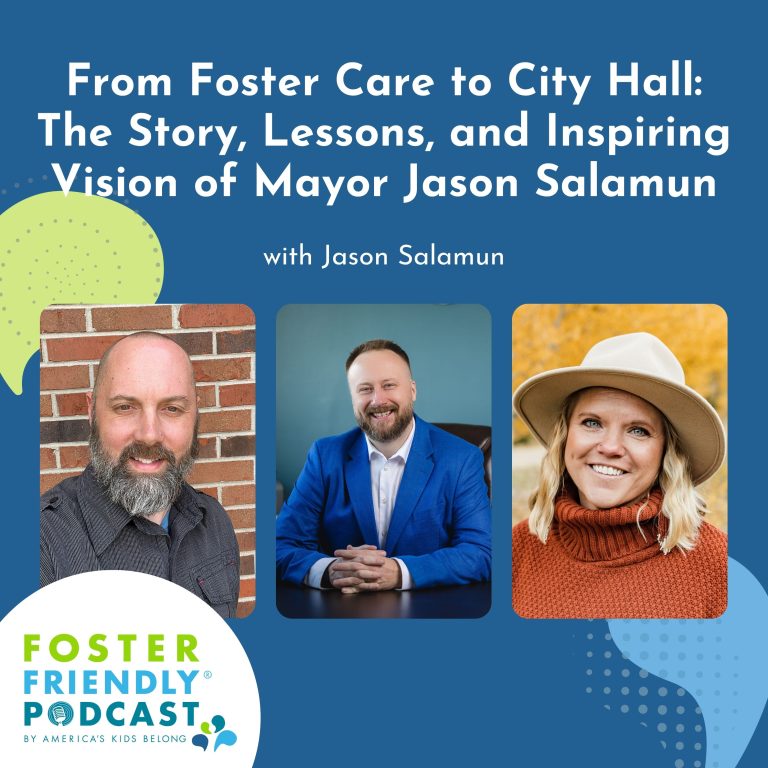
Episode 69 – From Foster Care to City Hall: The Story, Lessons, and Inspiring Vision of Mayor Jason Salamun

In this episode of the Foster Friendly podcast, host Travis Vangsnes and co-host Courtney Williams welcome Jason Salamun, the mayor of Rapid City, South Dakota. They discuss Jason's journey from a challenging childhood to becoming a community leader. Jason has a profoundly unique lens of seeing foster career and ways to support foster families having been in foster care, to later being a pastor, and then eventually a mayor galvanizing his city on the many ways to become involved. 

Jason shares insights on the growth of Rapid City, the beauty of the Dakotas, and the need for qualified foster families. The conversation highlights the interconnectedness of social issues, the importance of resilience in youth, and the vital role faith communities can play in supporting foster families and foster care initiatives. This conversation is encouraging and inspiring! 

Takeaways
  • Jason Salamun emphasizes the beauty and hospitality of the Dakotas.
  • Rapid City is experiencing significant growth, attracting families.
  • The importance of community support for children in foster care.
  • Resilience is key for youth facing challenges.
  • Faith communities can play a crucial role in foster care.
  • Foster families are essential for providing stability and love.
  • Every child deserves a place to belong.
  • Community engagement is vital for addressing social issues.
  • Jason's personal story highlights the impact of family support.
  • The need for qualified foster families is critical.

Episode 68 – Building a Church With a Heart for Foster Care and Birth Families with Kelly and Tracie Ward

In this episode of the Foster Friendly Podcast, hosts Brian Mavis and Travis engage with Kelly and Tracie Ward, a couple deeply involved in foster care and adoption. They share their personal journey, the challenges and joys of fostering, and how their church has embraced a mission to support families in crisis. The Wards emphasize the importance of community involvement, the need for churches to open their homes, and the profound impact of fostering on both children and families. They discuss the I Belong Project and the significance of reaching out to biological parents, highlighting that true ministry involves loving and supporting families in need.
Takeaways
  • The Wards have been married for 29 years and have eight children, including adopted and foster children.
  • They have fostered 29 kids in the past two years and recently became grandparents.
  • Their church's mission evolved to focus on foster care and adoption care.
  • Fostering is not just about the children; it's also about supporting their biological parents.
  • The church community can play a vital role in supporting foster families and children.
  • Fostering can change the trajectory of lives, both for children and their families.
  • The I Belong Project helps connect children in need with potential adoptive families.
  • Churches should open their homes to foster children and their families.
  • True ministry involves meeting families where they are and providing support.
  • Fostering creates a ripple effect, inspiring others to get involved. 

Episode 67 – Go Upstream: The Social Wounds Sex Trafficking, Addiction, and Poverty in Foster Care

In this episode of the Foster Friendly Podcast, Courtney and Brian Mavis delve into critical social issues affecting foster youth, including sex trafficking, addiction, and poverty. They discuss the alarming realities of sex trafficking in the U.S., particularly how foster youth are disproportionately affected. The conversation shifts to the cycle of addiction, exploring how trauma leads to substance abuse among youth in care. Finally, they address the economic challenges faced by former foster youth, emphasizing the importance of family support and community involvement in breaking the cycle of poverty.
Takeaways
  • Sex trafficking is a significant issue in the U.S., often overlooked.
  • Foster youth are particularly vulnerable to trafficking due to lack of family support.
  • Addiction often stems from trauma experienced in childhood.
  • The majority of youth in foster care have experienced some form of addiction.
  • Poverty is a major issue for former foster youth, often linked to lack of education and support.
  • Continuity in care and relationships is crucial for the well-being of foster youth.
  • Predators often pose as family figures to exploit vulnerable youth.
  • Community involvement is essential in supporting foster families and youth.
  • Teaching life skills, such as budgeting, can help foster youth succeed after care.
  • Connection and support can significantly reduce the risk of addiction and poverty.

Episode 66 – Foster Parenting and Electronics: Navigating the Challenges of Smartphones, Screens, and Social Media

In this episode of the Foster Friendly podcast, hosts Brian, Courtney, and Travis discuss the challenges of parenting in the digital age, particularly focusing on the impact of electronics on children and foster youth. They explore the complexities of managing technology access, the implications of the Foster Youth Bill of Rights, and the importance of establishing rules for electronics in the home.

The conversation also delves into the dangers of technology for kids in foster care, the significance of location tracking, and the necessity of open communication about online safety. The episode concludes with resources for foster parents to navigate these challenges effectively.

Bark: Parental controls and device monitoring tool
https://www.bark.us/

Takeaways
  • Parenting is inherently challenging, and electronics add complexity.
  • Electronics can affect children's focus and attention.
  • The Foster Youth Bill of Rights grants kids access to technology.
  • Establishing rules for electronics is crucial for safety.
  • Location tracking can pose risks for foster youth.
  • Open communication about online dangers is essential.
  • Foster parents should be proactive in discussing technology use.
  • It's important to balance freedom and safety in technology access.
  • Foster youth may have different experiences with technology than biological children.
  • Resources and support are vital for foster parents managing electronics.